
Key Takeaways
- Getting there from Europe: Most routes connect through Kuala Lumpur, Singapore, or Bali — total travel time is typically 16 to 22 hours depending on layovers.
- Best season: May to September for consistent swell and dry weather. July–August is peak — book well in advance.
- Kuta Lombok is the surf base: South coast town with the best access to beginner and intermediate breaks. Small, calm, easy to navigate.
- A structured camp makes the first trip much easier: No need to figure out spots, conditions, or gear — everything is handled so you can focus on surfing.

Getting to Lombok from Europe: What the Journey Looks Like
There are no direct flights from Europe to Lombok. Most routes connect through one of three hubs — and knowing which one suits your itinerary makes the booking process much simpler.
Via Kuala Lumpur (KUL) — AirAsia and Malaysia Airlines both fly direct from KUL to Lombok (LOP). This is often the most affordable routing from Germany, the Netherlands, France, and other Central European cities. Total travel time from most EU cities is around 16 to 18 hours depending on the layover length.
Via Singapore (SIN) — Singapore Airlines and Scoot connect SIN to Lombok. Slightly more expensive on average than the KL route, but Changi Airport makes layovers much more comfortable. Good option if your European departure is served well by Singapore Airlines.
Via Bali (DPS) + short hop to Lombok — Fly into Bali on any of the many EU–Bali routes (KLM, Qatar, Emirates, Garuda, etc.), then take a 30 to 40-minute domestic flight to Lombok with Lion Air, Wings Air, or Garuda. This is often the most flexible routing and allows a day or two in Bali if you want to break the journey. Total travel time from EU is 18 to 22 hours.
Visa: Most EU passport holders receive a visa on arrival (VOA) in Indonesia, valid for 30 days and extendable once for another 30 days. The VOA fee is paid in cash (USD preferred) on arrival at the airport. Confirm current requirements before travel as policies can change.
When to Go: Surf Season in Lombok
Lombok has surf year-round, but conditions vary significantly by season. For a first trip — especially one built around a structured surf camp — timing matters.
May to September — Dry season, best surf. This is the prime window for surfing Lombok for the first time. Consistent south and southwest swells, dry weather, and calmer winds make for good conditions across most beginner and intermediate breaks around Kuta. July and August are the busiest months — accommodation at good surf camps fills up fast. Book 4 to 6 weeks in advance minimum for these dates.
October to April — Wet season, variable conditions. The wet season brings more rain, stronger winds, and less consistent swell. It is not impossible to surf — and some experienced surfers prefer the quieter environment — but for a first camp trip, the dry season is the safer and more rewarding choice. If you can only travel in these months, April and October sit on the edges of the season and can still offer decent windows.
EU school holiday alignment: July and August align with European summer holidays — peak season in Lombok. If you are flexible on dates, late May, early June, or September offer comparable surf conditions with fewer crowds and more accommodation availability at better prices.

What Kuta Lombok Is Actually Like
Most first-time visitors from Europe arrive expecting a smaller, quieter version of Kuta Bali. Kuta Lombok is something quite different — and usually in a good way.
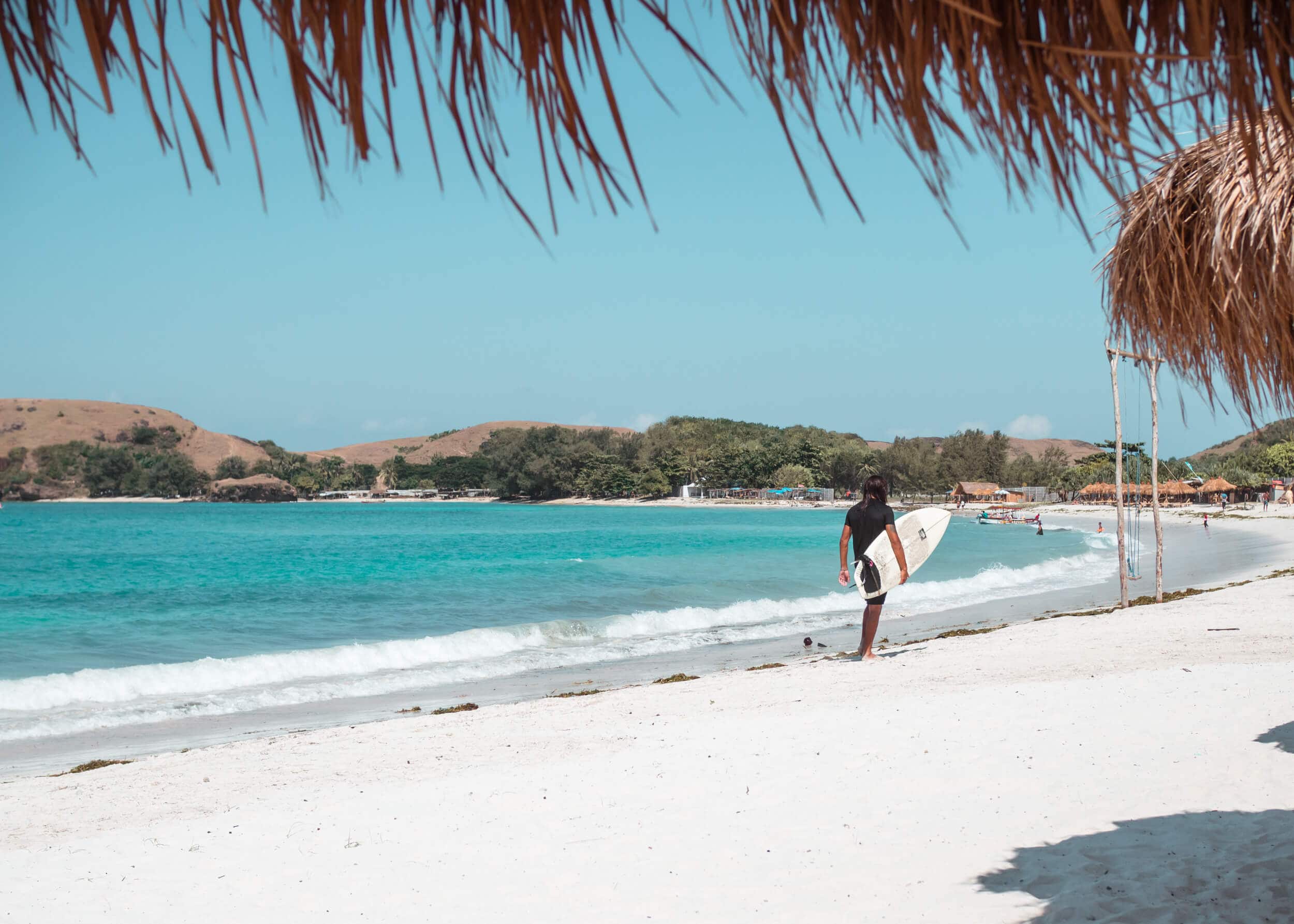
The town is small. The main strip has restaurants, warungs, a few surf shops, money changers, and pharmacies — everything you need, without the commercial noise of a resort town. Motorbikes are the primary transport. Roads are a mix of sealed and unsealed. Getting around is easy and cheap once you are oriented.
The beaches in the Kuta area vary significantly in character — some are calm and sandy, some rocky, some exposed to solid swell. The surf camp program takes this into account: coaches choose the right spot for each session based on conditions and the group’s level. As a first-time visitor, you do not need to figure this out yourself — that local knowledge is exactly what structured coaching provides.
A few practical notes for EU travelers arriving for the first time: the time difference from Central Europe is UTC+8, which is 6 to 7 hours ahead depending on daylight saving time. Jet lag is manageable — most guests adjust within a day or two. Cash (Indonesian Rupiah) is still king in Kuta for smaller purchases. ATMs exist in town but have withdrawal limits. Bring some USD or EUR to exchange on arrival. Mobile data: a local SIM card is cheap and easy to buy at the airport — Telkomsel and XL Axiata both have decent coverage in Kuta Lombok.
Why a Surf Camp Makes More Sense Than Going Independent for a First Trip
It is possible to arrive in Lombok, rent a board, and figure out the surfing yourself. Experienced surfers do this all the time. For a first-time visitor who is also learning to surf, it is a significantly less efficient approach — and often a more stressful one.
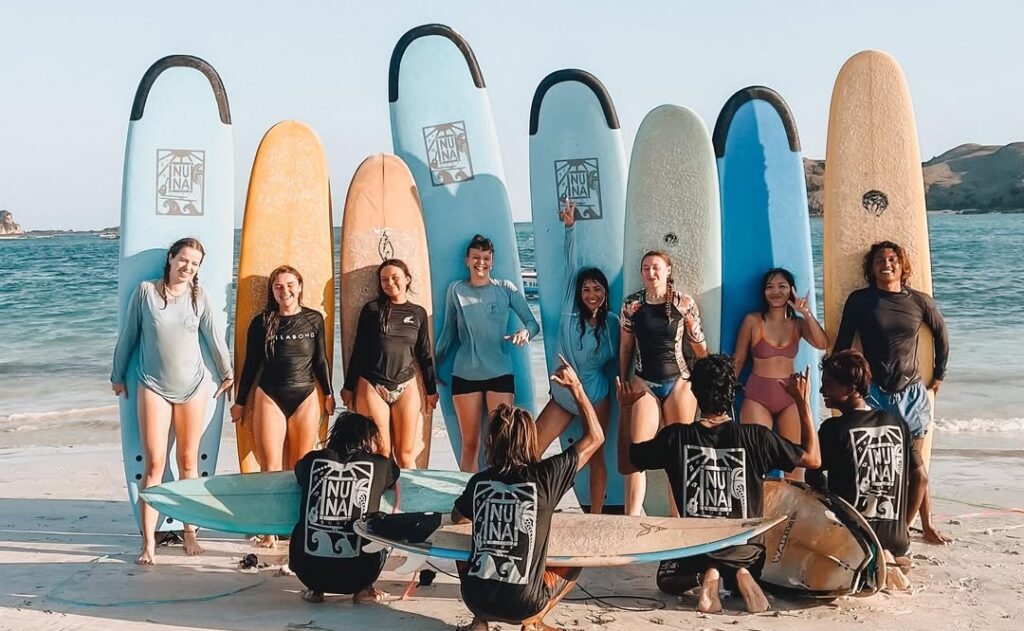
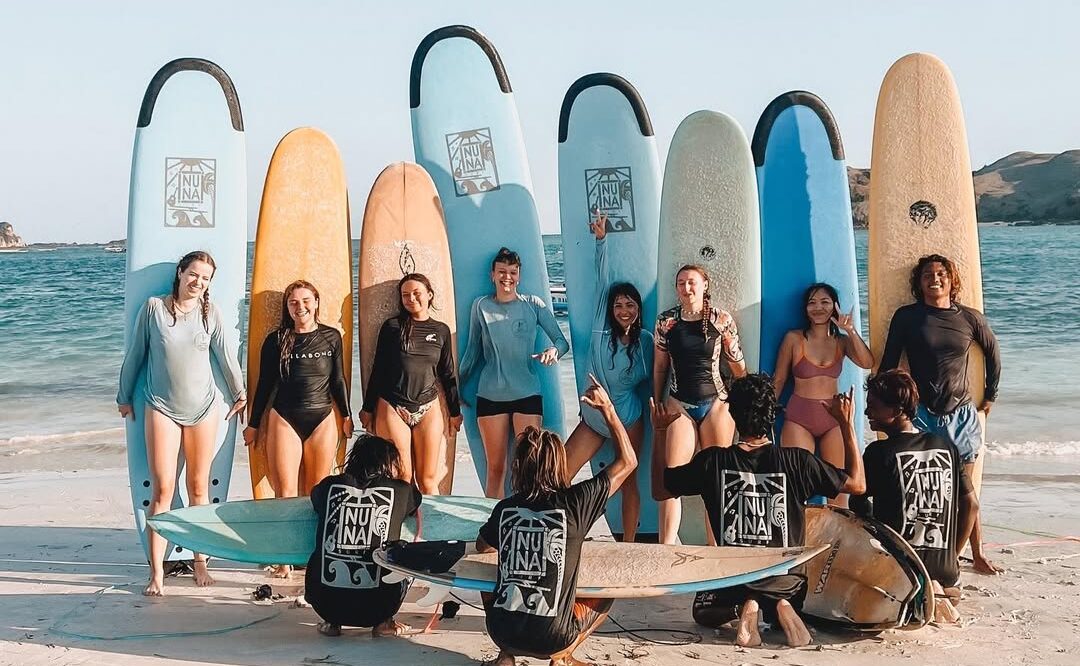
The practical argument for a surf camp on a first trip is simple: every logistical decision is handled for you. Which spot is suitable today? What board is right for your level? Is the swell too big or too small? Who do you ask when you are not sure about something? At Nuna Surf Camp in Kuta Lombok, those questions are answered before they become problems — ISA-certified coaches, a 1 coach : 2 students ratio, daily video feedback, and a structured weekly program covering surf, recovery, and local culture.
The social element also matters more than most first-timers expect. Arriving solo in an unfamiliar country and trying to build a surf routine from scratch is doable, but lonely and inefficient. A camp puts you immediately in the company of people at the same level, with the same goal, in an environment that is designed to make the week work. That is a meaningfully better start to a surf trip from Europe than a guesthouse and a rented board.
To ask about dates, packages, and room availability before committing, the easiest way is via WhatsApp. The team responds quickly and can answer anything this guide has not covered. Message Nuna Surf Camp here.
Surf Camp: Surf Camp | Rooms: Rooms | WhatsApp: Chat with Nuna Surf Camp (+62 822-3658-9725)