Key Takeaways
- Indonesia has multiple surf destinations — Bali, Lombok, Mentawai, Nias — each suited to different experience levels.
- Lombok is one of the best choices for beginner to intermediate surfers: consistent waves, less crowded, well-structured camps.
- A surf camp in Lombok combines learning, accommodation, and culture in one accessible package.
- What makes a surf camp genuinely good: coaching quality, group size, structure, and the environment it creates.

Indonesia’s Main Surf Destinations — A Honest Comparison
Before committing to a surf camp in Indonesia, it helps to understand what each major destination actually offers — and who each one is best suited for.
Bali — The most well-known surf destination in Indonesia and probably the world. Bali has incredible waves, a well-developed surf industry, and countless schools and camps. It’s also very busy, especially in peak season. Crowded lineups can be intimidating for beginners, and the sheer number of options can make it harder to find something genuinely quality amid the noise. That said, areas like Canggu and Uluwatu have established surf schools and some excellent camps for those who do their research.
Mentawai Islands — World-class waves, but mostly suited to intermediate-advanced surfers. Surf trips here tend to be boat-based and significantly more expensive. Not the right choice for beginners.
Nias — Legendary for advanced surfing. Lagundri Bay is one of the most famous reef breaks in the world. Not recommended for first-timers.
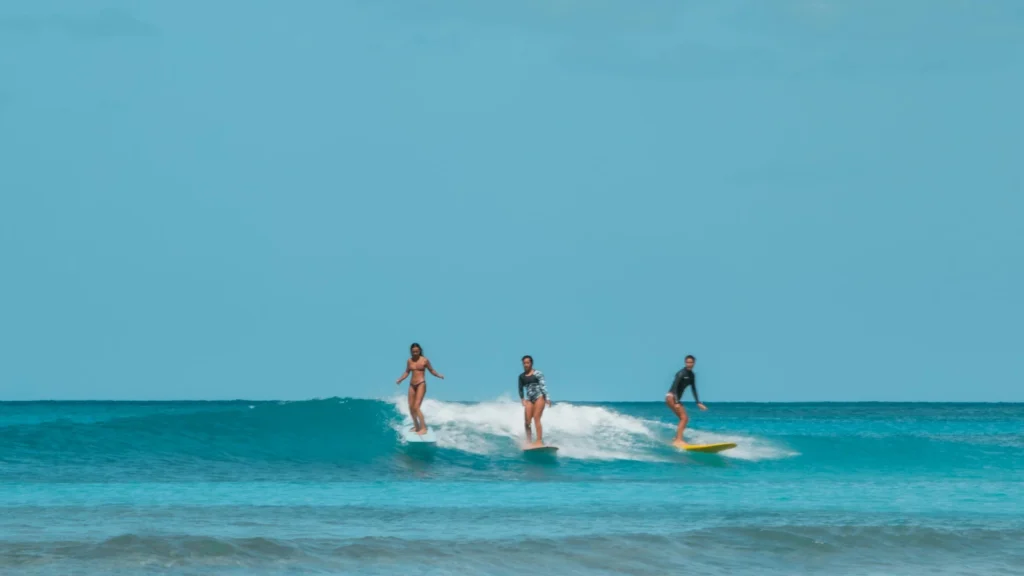
Lombok — The smart middle ground. Lombok has a range of surf spots from beginner-friendly beach breaks to more challenging reef waves. The surf scene in Kuta Lombok is well-developed but significantly less crowded than Bali. Surf camps here tend to be smaller, more personal operations — which is a good thing if you’re serious about improving. The island itself is beautiful, culturally rich, and more relaxed than Bali, which supports the kind of recovery and rest that makes surf progression possible.

Why Lombok Works So Well for Beginner and Intermediate Surfers
Kuta Lombok — not to be confused with Kuta in Bali — is a small, relaxed town on the south coast of Lombok. It’s the center of the island’s surf scene and the home of Nuna Surf Camp. Here’s why it works particularly well for learners:
Wave variety at the right level. The south coast of Lombok has multiple surf spots, and coaches at local camps know them intimately. Beginner sessions are run at spots where the waves are consistent, the crowd is minimal, and the conditions are forgiving. As you improve, the options expand.
No information overload. Bali’s surf scene can feel overwhelming — dozens of schools, aggressive marketing, packed beaches. Lombok is quieter, which makes it easier to settle in, focus on your surfing, and actually enjoy the experience rather than spending energy navigating a crowded scene.
A better environment for recovery. Surfing progress depends as much on rest as it does on water time. Lombok’s relaxed pace, good food, and comfortable accommodation at Nuna Surf Camp create conditions that support recovery — and recovery supports improvement.
Culturally rich and genuinely interesting. Lombok has a distinct culture and character that makes it worth exploring beyond the surf. The weekly program at Nuna includes a local cultural experience (the Local Woman Tour) that gives guests a deeper connection to the island — something that’s harder to find in Bali’s more tourist-saturated areas.

What Makes a Surf Camp in Indonesia Actually Good?
Not all surf camps are built the same. Here are the factors that separate a genuinely good camp from an average one — and why they matter if you’re trying to actually improve:
Coaching certification and ratio. ISA (International Surf Association) certification matters because it means coaches have been trained to a recognized standard. The student-to-coach ratio matters because more individual attention means faster, safer progress. At Nuna, the ratio is 1 coach to 2 students — significantly better than the 1:6 or 1:8 ratios common in larger operations.
Video feedback. Watching yourself surf is one of the most powerful learning tools available. Most people have no idea what they actually look like in the water — and seeing yourself immediately reveals what needs to change. Nuna includes daily video and photo feedback in the program.
Spot selection expertise. A good camp chooses surf spots based on your level and the day’s conditions — not based on what’s convenient for the camp. This requires local knowledge, experience, and a genuine commitment to your safety and progression.
Recovery built into the schedule. Yoga, ice baths, rest time, and community activities aren’t extras — they’re part of what makes a surf camp week effective. Camps that just pile in session after session without recovery tend to produce tired, frustrated guests rather than improving surfers.
Ready to see what this looks like in practice? Send Nuna Surf Camp a message on WhatsApp to ask about upcoming availability and which package suits your level.

Planning Your Surf Camp in Indonesia: Practical Considerations
A few practical things worth knowing before you book a surf camp in Indonesia — specifically Lombok:
Getting to Kuta Lombok. Lombok has its own international airport (Lombok International Airport / LOP), with connections from Bali, Jakarta, Singapore, and Kuala Lumpur. From the airport, Kuta Lombok is about 45 minutes by car. Most camps, including Nuna, can advise on transport options when you book.
Best time to go. Lombok’s surf season peaks between May and September, when consistent swells from the south produce the best conditions. That said, the island gets surf year-round — the off-peak months are quieter, which can actually be a better experience for beginners who prefer less crowded breaks.
What to budget. Beyond the surf camp package itself, Lombok is affordable. Food at local warungs is inexpensive, transport is cheap, and there are no big-ticket tourist attractions that will drain your budget. Most guests find they spend less in Lombok than they expected.
Solo travel is common. If you’re considering solo travel to Lombok for a surf camp, you’re in good company. Nuna Surf Camp’s guest mix regularly includes solo travelers from Europe and beyond — and the community atmosphere of the camp makes it easy to connect with other guests.
Surf Camp: View Packages | Rooms: Check Availability | WhatsApp: Chat with Nuna Surf Camp