

Key Takeaways
- Simple loop: Surf → Review (video/notes) → Adjust → Recover → Repeat.
- 1 coach : 2 students, ISA-certified coaches, daily video feedback, safety briefings.
- Day-by-day: Sunday orientation, Monday–Saturday surf + recovery activities (yoga, surf skate, ice bath, BBQ).
- Flexible timing based on tides and conditions—a good sign.

The Big Picture of a Surf Camp Week
A surf camp week is not only about the time you stand on a board. A good camp builds a simple loop: 1) Surf a suitable spot for your level and the day’s conditions. 2) Review what happened (video or practical coaching notes). 3) Make one or two adjustments in the next session. 4) Recover well, so you can repeat the loop without burnout. This cycle—surf, review, adjust, recover—is what creates measurable progress over a week.
Nuna emphasizes trust signals that strongly shape the week: 1 coach : 2 students in the water, ISA-certified local coaches, daily video and photo feedback, safety briefing before sessions, and a calm environment with comfortable rooms (AC, hot shower, daily cleaning, WiFi). These elements are consistent across their packages.
Before You Arrive: What to Prepare
Share these details before booking or arrival: travel dates, surf level (complete beginner / beginner / intermediate), any fears or limitations (nervous in ocean, shoulder issues), room preference (dorm vs private), number of travelers. These details help the camp recommend the right package and plan your week.
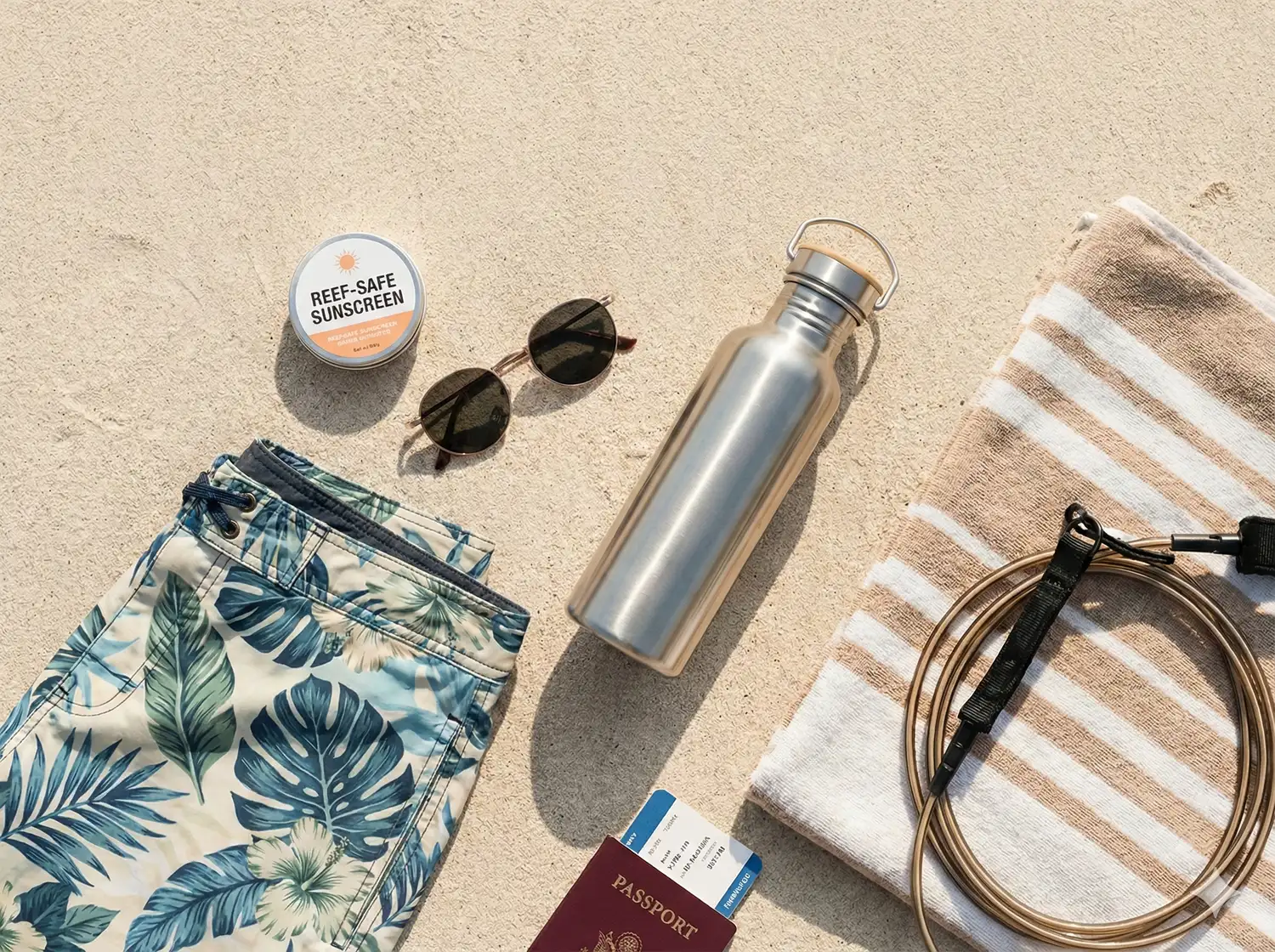
Pack for comfort, not for perfect: swimwear (enough to rotate), reef-safe sunscreen, flip-flops or sandals, comfortable casual clothes, light jacket for evenings. Optional: your own yoga mat if you like mobility sessions. Boards and basic surf equipment are described as provided for lessons and camp sessions, including soft-top boards for beginners. You do not need to bring your own board.
Arrival and Orientation: How the Week Typically Starts
Nuna’s weekly schedule indicates arrival and orientation on Sunday with check-in from 2:00 PM, meeting the team and other guests, orientation about the week and surf approach, and a sunset trip plus rooftop surf theory session (8:00–9:00 PM). The first evening sets the tone: you learn what to expect, where to meet, and how safety is handled.
Day-by-Day Expectations (Based on Nuna’s Weekly Schedule)
Sunday—Arrival & Orientation: Check-in from 2:00 PM, meet the team and other guests, orientation about the week and surf approach, sunset trip and rooftop surf theory (8:00–9:00 PM). Even if you have surfed before, orientation matters. The first goal is to reduce uncertainty: where you will meet, what the plan is, and how safety is handled. If you are traveling solo, this is when the week starts to feel easy—you join a group rhythm.
Monday—First Surf Experience: First surf class, drone session during surf, video analysis elements. For beginners, Monday is typically about where to sit (positioning), how to paddle efficiently without exhausting yourself, and pop-up timing with calm repetition.
Tuesday—Strength & Recovery: Surf class, surf strength training, ice bath and magnesium chloride recovery, pool and sauna session. This kind of day helps you understand an important surf camp principle: recovery is part of skill development. Beginners often improve more when they feel physically good, not when they push through.
Wednesday—Skill & Flow (Surf Skate): Surf class, surf skate session. Surf skate can help with balance and stance, turning mechanics on land, and confidence with weight shifting. It is also a good mental break from water time while still reinforcing technique.
Thursday—Recovery & Sunset: Surf class, yoga session, sunset BBQ on the beach. Yoga and mobility can be especially helpful if you are tight through hips and shoulders, fatigued from paddling, or working on smoother pop-ups. The community element (BBQ) tends to make the camp feel less like a course and more like a supportive environment.
Friday—Double Surf Day: Morning surf class, second surf class for progression and confidence. Two sessions in one day can feel intense if you are a beginner. Fuel well, hydrate, and accept that the second session may be about reinforcing basics rather than new tricks.
Saturday—Culture & Wrap-Up: Local cultural trip (Local Woman Tour), surf class with photos or drone, rooftop surf theory, picture/video review session, sunset trip. A well-designed wrap-up day usually helps you identify what improved the most, what you should focus on after the camp, and how to continue safely if you keep surfing independently.

Coaching Approach and Accommodation
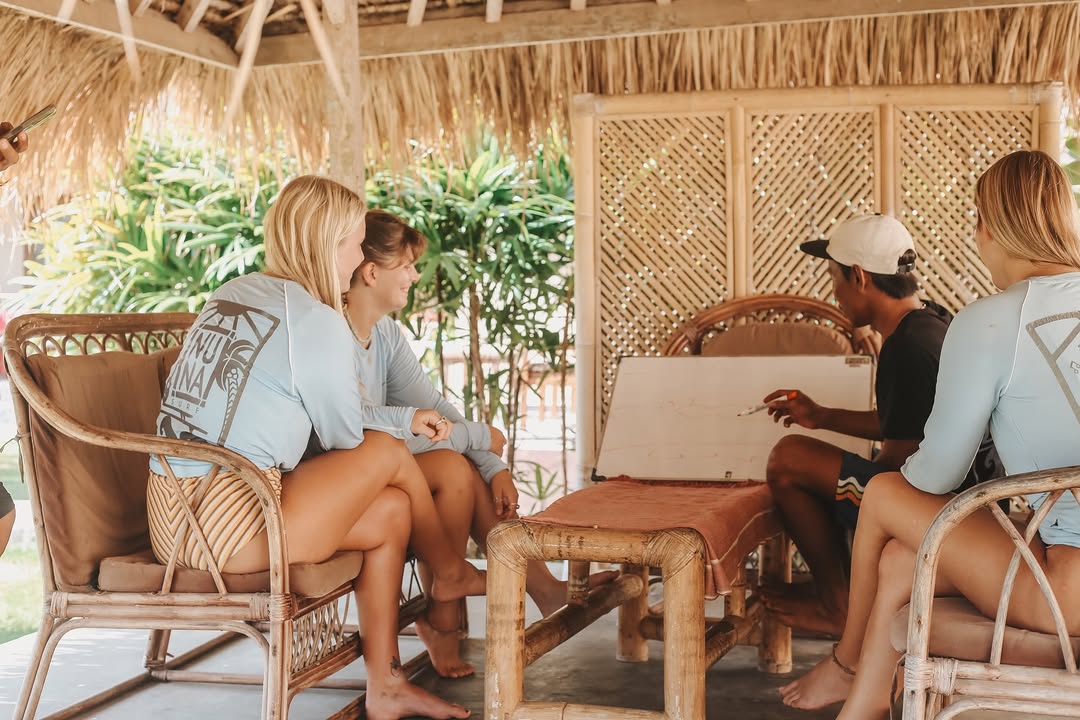
You can expect level matching (sessions adapted to your ability and daily conditions), spot choice (coaches choose the best surf spot based on tide, wind, and your level), clear safety guidance with briefings before sessions, and a feedback loop with video/photo review and simple correction points. For beginners, the best coaching often feels quiet rather than dramatic—calm, specific, and repeatable.
Daily surf timing can change based on tides, wind, and the best spot for the group. That flexibility is normal and is generally a good sign, because it means the plan follows conditions rather than forcing sessions. Most days revolve around breakfast, coached surf session, review/analysis (video, photos, or coaching notes), and one additional training, recovery, or community activity depending on the day and package. If you are a beginner, the week often feels like a gradual shift: the ocean becomes less intimidating, and sessions become more purposeful rather than random attempts.
Accommodation: Nuna describes it as part of the surf camp experience with strong AC, hot showers, daily cleaning and fresh towels, fast WiFi, and cozy common areas. Room options: Mix Dorm (12 beds), Female Dorm (8 beds), Rumah Lumbung (private), Deluxe Room (private). Choose dorm for social connection and budget simplicity, private for deeper rest and a quieter recovery base. Rooms for availability.
What progress should feel like: Progress during a surf camp week often looks like more consistent wave catching, calmer positioning, better pop-up timing, improved stance and balance, and more confidence navigating a lineup. It rarely looks like advanced surfing in a week, and that is fine. For beginners, the most valuable outcome is a foundation that makes future surfing safer and more enjoyable.
Next Step: Confirm Dates, Choose Room Style, Ask Questions Early
The best surf camp week starts before you arrive: clear expectations, a room choice that supports rest, and honest communication about your level.
Surf Camp: Surf Camp | Rooms: Rooms | WhatsApp: Chat with Nuna Surf Camp (+62 822-3658-9725)