Key Takeaways
- Surf camp: Stay-and-surf format with accommodation, structured routine, and supporting activities.
- Surf school: Lesson-based format—book lessons without requiring stay at the camp.
- Both offer 1:2 coaching; surf school also has private 1:1 options.
- Camp = less planning, more structure. School = more flexibility, more independence.

The Simple Definition
A surf camp is a stay-and-surf format. It combines accommodation, a structured surf routine, and supporting activities that help you progress and recover. With Nuna, the surf camp is based in Kuta Lombok and designed for beginner to intermediate surfers who want real progress in a relaxed setting, with sessions matched to level and daily conditions.
A surf school is a lesson-based format. You book surf lessons (single or multi-day), usually without requiring you to stay at the same place. With Nuna, surf school options include semi-private and private lessons, plus a 5-day surf school program. It is positioned for beginners to intermediate surfers who want clear progress with calm guidance.
Key Differences: Structure, Accommodation, Coaching, and Activities
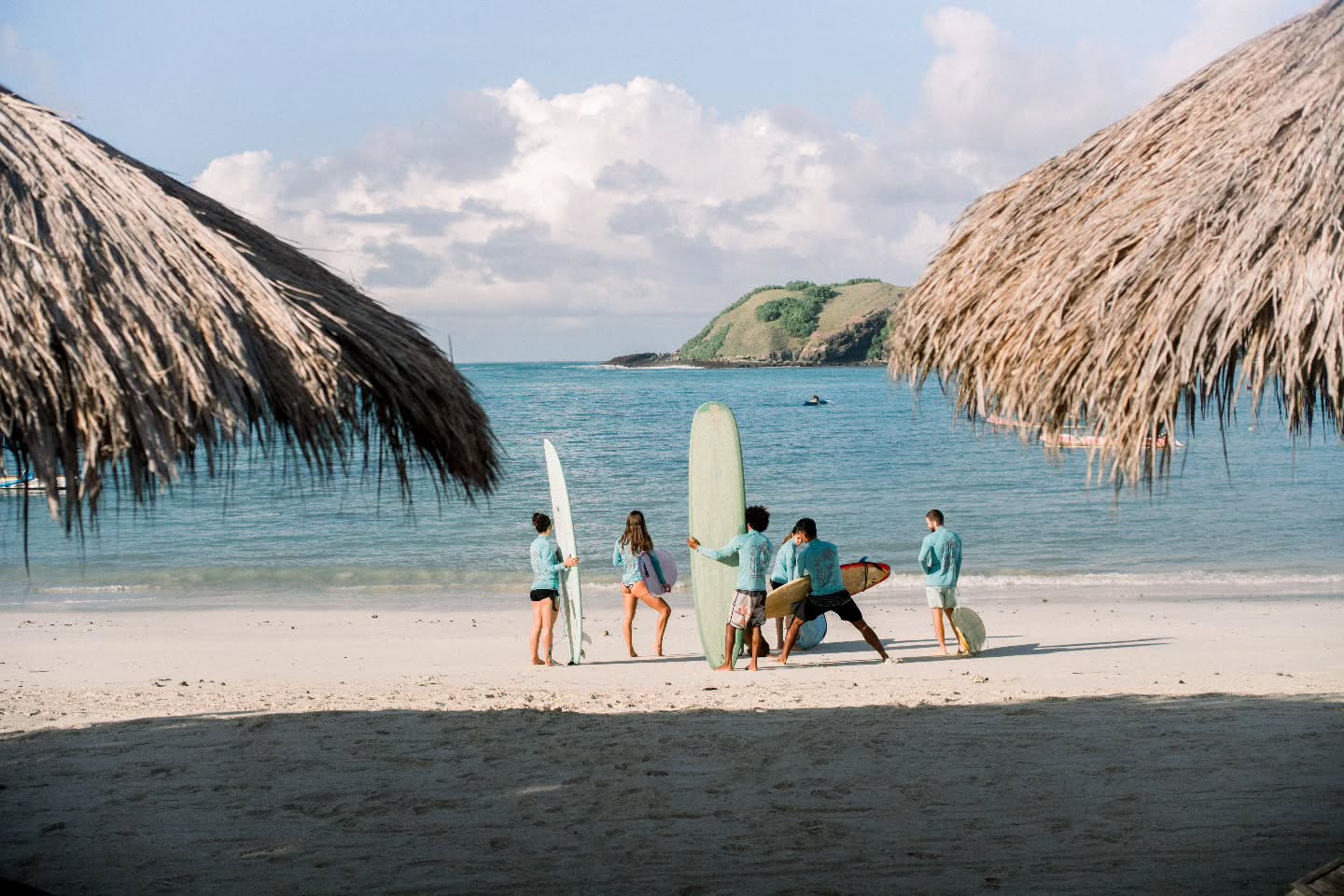
Structure and routine: This is usually the biggest difference. With surf camp, the day is built around surfing and recovery—you follow a weekly flow and do not need to plan much once you arrive. With surf school, you plan around lessons: you may surf with a coach for a set window, then handle the rest of your day independently. If you value simplicity, a surf camp often feels easier. If you value flexibility and independence, surf school can be a better fit.
Accommodation (included vs separate): With a surf camp, accommodation is part of the experience and booking flow. Nuna’s camp directs booking through its Rooms page and emphasizes comfort features: strong AC, hot showers, daily cleaning and fresh towels, fast WiFi. With surf school, you can either stay at Nuna anyway (and keep a similar routine) or stay elsewhere in Kuta Lombok and just come for lessons. If you already have a hotel booked, surf school can reduce friction. If you do not, a surf camp can be a cleaner, all-in-one choice.
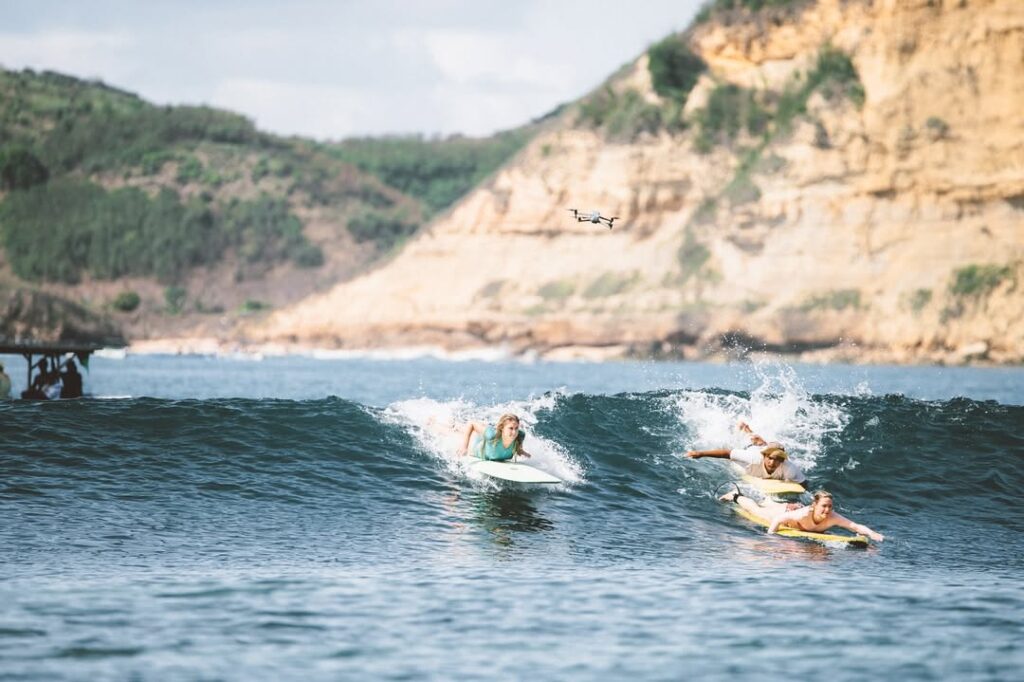
Coaching ratio and attention: Nuna highlights small-group coaching across both offerings. Surf camp is promoted as 1 coach : 2 students. Surf school semi-private lessons are 1:2, private lessons are 1:1. From a learning perspective: if you want fast feedback but still enjoy a social setting, semi-private (1:2) often feels ideal. If you want maximum attention or feel nervous in the ocean, private (1:1) can be the most comfortable.
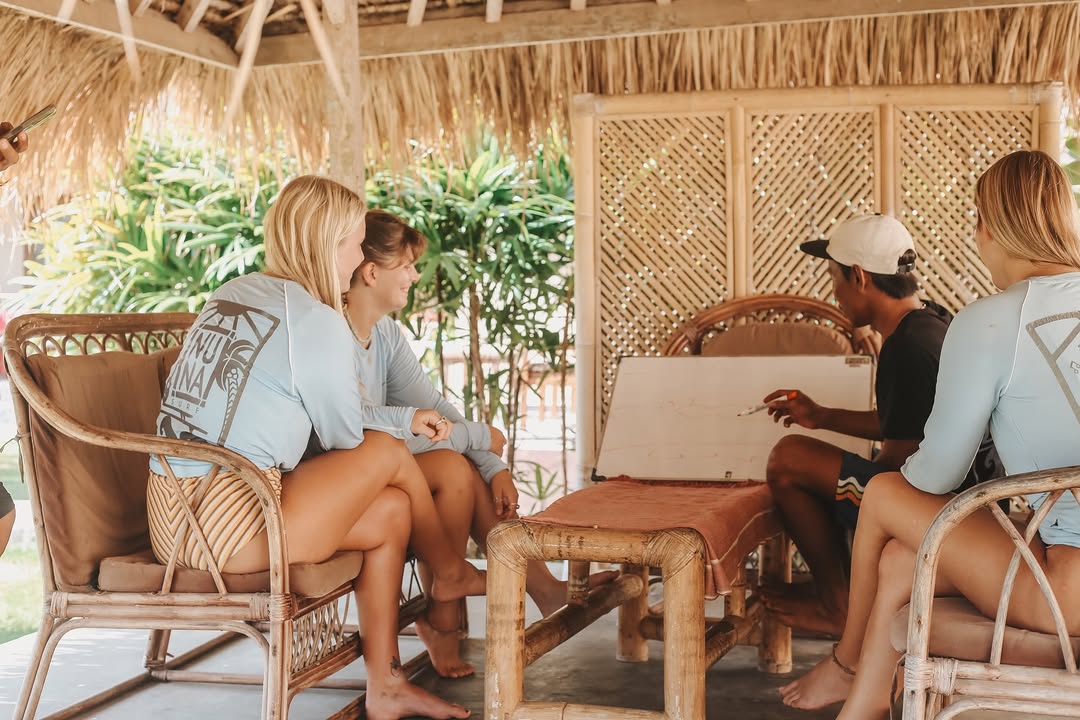
Progression support (feedback loop): Nuna emphasizes daily video and photo analysis as a core method in camp. That kind of feedback loop matters because it makes improvement more measurable and less emotional. Surf school also references video/photo analysis elements. In practice, whether you choose camp or school, it helps to ask: Will I get feedback based on video or photos? How will we decide what to focus on tomorrow? A camp format usually makes those decisions more automatic because you are on a week plan.
Supporting activities: Surf camp packages include surf skate training, safety and pool sessions, surf mobility sessions, ice bath and sauna recovery, yoga sessions, sunset trips and BBQ/jam sessions (depending on package length), and a Lombok culture trip (for longer packages). Surf school lessons are more focused on coaching blocks. You can still do other activities in your free time, but they are not necessarily integrated into your schedule unless you choose the camp format. If you want a week that balances surf and recovery without planning, camp is typically simpler.
Cost and value: The fair comparison is not surf camp vs surf school price. It is: How many coached hours are included? What is the coaching ratio? What is included besides coaching (equipment, transfers, analysis, accommodation, breakfast, recovery sessions)? For surf school, Nuna lists starting prices such as semi-private from IDR 600,000 per session, private from IDR 700,000, plus 5-day surf school programs. For surf camp, prices vary by room type and package length and are published on the Rooms page. Because accommodation is included, camp can be a strong value if you want a single booking that covers both stay and surf routine.
Who Should Choose Which?
Choose surf camp if you want a structured week with minimal planning, consistent daily surfing matched to your level, a supportive social environment (especially if you travel solo), integrated recovery and mobility sessions, and a comfortable base designed for surfers. This is particularly helpful for beginners because it reduces uncertainty. Instead of deciding where to go and whether conditions are okay, you rely on coaches to choose the right surf spot and keep sessions aligned with your level. If this sounds like you, start at Surf Camp.
Choose surf school if you want coaching without committing to a full camp stay, already have accommodation arranged, prefer to travel independently and build your own schedule, or want to choose between semi-private (1:2) and private (1:1) based on comfort level. Surf school can also be the better fit if you are staying longer in Lombok and want to spread lessons across your trip rather than following a camp week. You can review lesson formats at Surf School.
Beginner-focused decision guide: Do you feel comfortable organizing your own surf days? If you want everything organized and level-matched, choose camp. If you are happy planning your days and just want coaching blocks, surf school. Do you want community built into your week? If traveling solo and want an easy social environment, camp (or camp accommodation + school lessons). If you prefer independence and a quieter lifestyle, surf school plus separate accommodation. Do you want maximum attention? Private surf school lesson (1:1) may be best. If you want personal coaching but not fully private, 1:2 (camp or semi-private) is typically a strong balance.
Next Step: Ask for the Right Recommendation
Message Nuna with your travel dates, surf level, whether you prefer camp week or lesson-only, and room preference if considering camp. Then confirm availability via Rooms (for camp) or ask about lessons.
Rooms and camp booking: Rooms
WhatsApp: Chat with Nuna Surf Camp (+62 822-3658-9725)