Key Takeaways
- Lombok’s waves in Kuta are well-suited for beginners — consistent, readable, and less crowded than Bali.
- Learning to surf takes time — realistic progress in a week means standing up, catching waves, and building confidence.
- Small group coaching (1:2 ratio) makes a significant difference compared to large group lessons.
- A surf camp gives you more than lessons — structure, recovery, and community all support faster improvement.

Why Lombok Is a Great Place to Learn to Surf
The honest reason Lombok works well for beginner surfers comes down to three things: wave quality, crowd levels, and the overall environment.
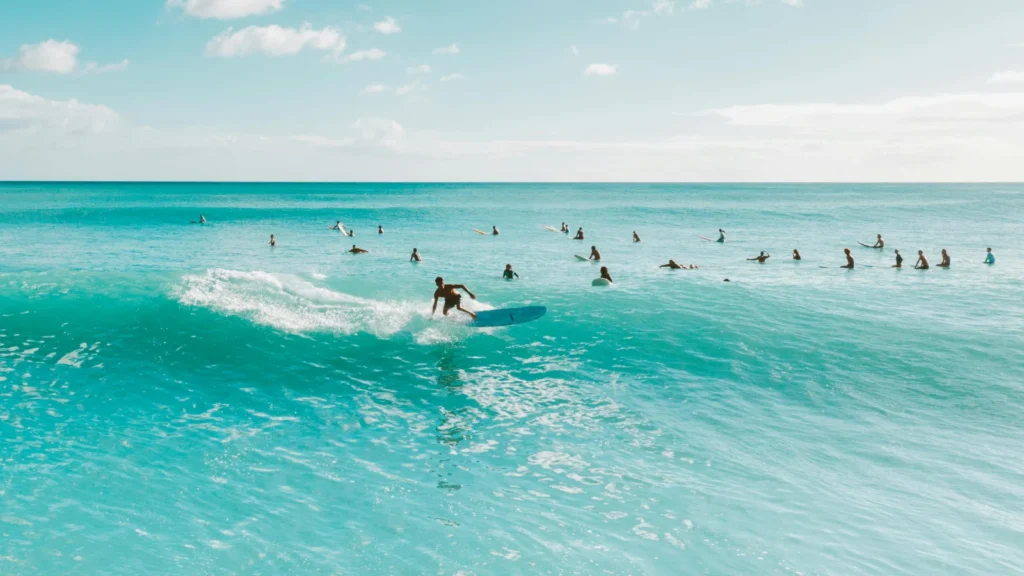
Wave quality for beginners. Kuta Lombok has a range of surf spots with different break types and difficulty levels. For beginners, the key is access to mellow, consistent waves that allow repetition — the foundation of any skill-building process. Lombok’s surf scene offers this, with coaches who know which spots are appropriate for each level and each set of tide and wind conditions.
Less crowded lineups. Bali is well-known for surfing, but that popularity comes at a cost — crowded breaks, competition for waves, and a more intimidating environment for first-timers. Lombok’s surf scene is smaller and calmer, which means more space to practice, more wave opportunities per session, and a less stressful learning environment overall.
A supportive surf camp culture. Lombok’s surf camps are generally well-structured and focused on genuine improvement rather than just getting guests into the water. At Nuna Surf Camp in Kuta Lombok, the coaching is built around ISA-certified coaches, small group ratios, and daily feedback — a setup designed for real learning, not just tourist experiences.
If you’ve been on the fence about whether Lombok or Bali is better for learning to surf, the honest answer for most beginners is Lombok — especially if you’re coming for a dedicated camp experience rather than a drop-in lesson.

What the Learning Process Actually Looks Like
One of the most common misconceptions about learning to surf is that it should happen fast. In reality, surfing has a steeper learning curve than most people expect — and that’s okay. Understanding the actual process helps you set realistic expectations and enjoy the journey rather than feeling frustrated by it.
The first sessions are almost entirely about fundamentals: how to paddle efficiently, how to read incoming waves, where to position yourself in the lineup, and the mechanics of the pop-up (getting from lying to standing on the board). These things sound simple but require repetition to feel natural.
The middle of a camp week is where most guests notice a shift. The ocean becomes less intimidating. The pop-up starts to feel more automatic. Wave selection begins to make sense. This is the phase where coaching makes the biggest difference — small, specific corrections can unlock significant improvements.
By the end of a camp — whether 3, 5, or 7 days — most beginners can catch waves with more consistency, stand up with reasonable form, and navigate a beginner-friendly lineup with basic confidence. That’s a meaningful outcome. It’s not advanced surfing, but it’s a real foundation that makes every future surf session more enjoyable.
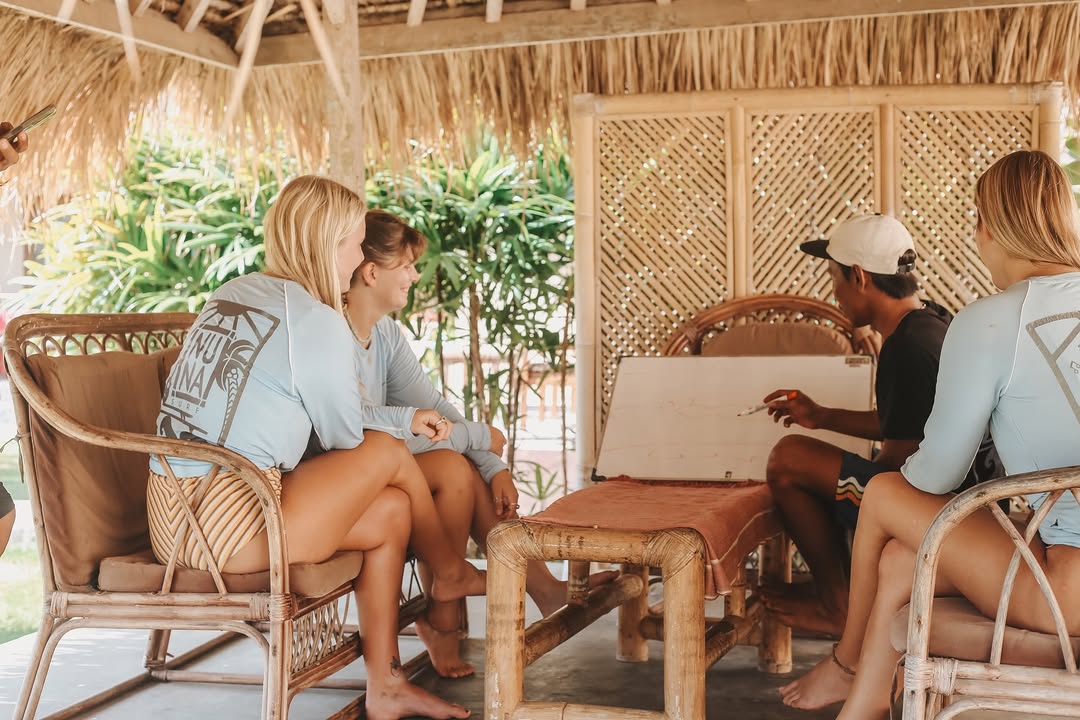
At Nuna Surf Camp, this process is supported by daily video feedback — you get to watch yourself surf, which speeds up the learning loop considerably. Most people are surprised by what they see, and that visual feedback tends to accelerate improvement faster than verbal coaching alone.

Surf School vs Surf Camp: Which Is Better for Learning?
If you’re serious about learning to surf in Lombok, it’s worth understanding the difference between a surf school and a surf camp — because they deliver very different experiences.
A surf school typically offers individual lessons or small group sessions. You show up, have a lesson, and go back to wherever you’re staying. The learning is focused, but there’s no structure around recovery, accommodation, or continuity between sessions.
A surf camp is a complete package: accommodation, daily coached sessions, recovery activities, and a structured weekly program. The advantage of this format is that everything supports the learning process — you sleep where you surf, your schedule is built around sessions, and the coaching team gets to know your level across multiple days rather than just one lesson.
For most beginners, a surf camp produces better outcomes than individual lessons because the consistency and structure create the conditions for real improvement. At Nuna Surf Camp, the surf camp packages are built around this philosophy — stay, surf, recover, repeat — in a calm, beginner-friendly environment in Kuta Lombok.
If you’re still deciding between options, the Surf Camp vs Surf School in Lombok article gives a more detailed comparison.
Practical Tips Before Your First Surf Session in Lombok
A few things that will make your first surf experience in Lombok go more smoothly:
Be honest about your level. Whether you’ve never been in the ocean or you’ve had a few lessons years ago, tell your coach the truth. This shapes which spot you surf, what you focus on, and how quickly you progress. Overselling your ability doesn’t help anyone.
Reef-safe sunscreen is non-negotiable. Lombok’s marine environment matters. Standard sunscreen damages coral reefs. Use mineral-based, reef-safe options — and reapply frequently. Most camps, including Nuna, reinforce this.
Hydrate more than you think you need to. Surfing in tropical heat is dehydrating. Saltwater and sun exposure compound this quickly. Drink water before sessions, between sessions, and in the evenings.
Rest is productive. It might feel like you should be surfing every available moment, but rest between sessions is when your body consolidates learning. Trust the schedule.
Boards are provided. You don’t need to bring your own board. Nuna provides soft-top boards for beginner sessions — the right board for the level and conditions is always chosen by the coach.
Ready to start? Send Nuna Surf Camp a message on WhatsApp to ask about dates, packages, and which option suits your goals best.
Surf Camp: View Packages | Rooms: Check Availability | WhatsApp: Chat with Nuna Surf Camp