Key Takeaways
- Lombok’s advantage: Variety of spots within reach—match sessions to daily conditions.
- Calmer pace and fewer crowds than some busy surf hubs—helpful for beginners.
- Coaching structure matters more than the destination: 1:2 ratio, ISA-certified coaches, video analysis.
- Choose camp or school based on your trip style—both can be beginner-friendly.

What Makes a Destination “Good for Beginners”
When people say a place is good for beginner surfing, they sometimes mean “easy waves.” In reality, beginner suitability is a combination of wave choice (not all waves are suitable even if they look small), crowd levels (crowded lineups increase stress), daily conditions (tide and wind matter), safety support (briefings, safe entry/exit, supervision), and progression structure (learning goals that build step by step).
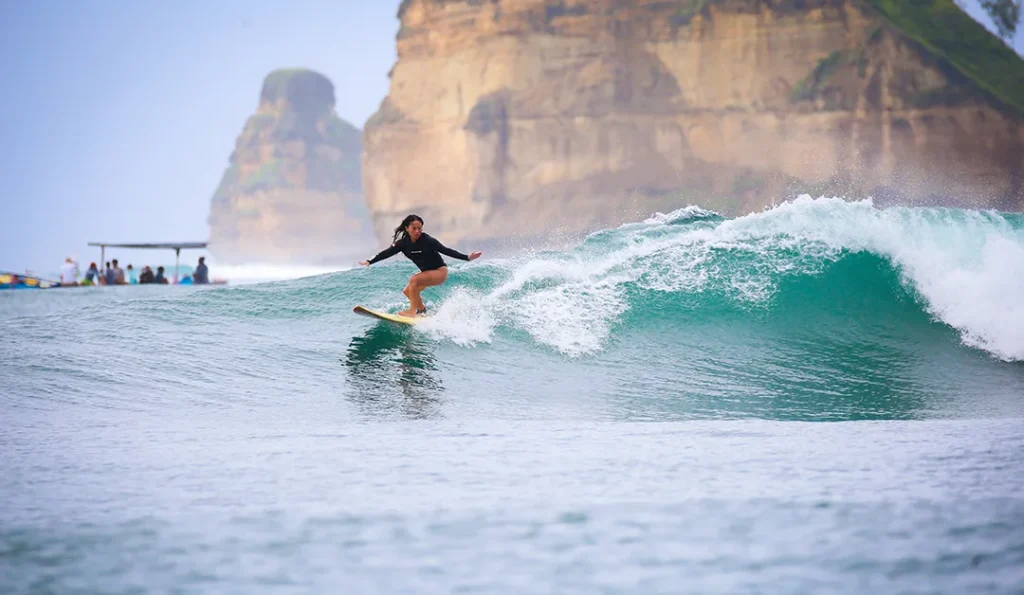
Lombok’s advantage is variety. From Kuta Lombok, you can reach multiple surf areas and match a session to the day’s conditions. That flexibility is especially helpful for beginners—when someone experienced makes the call for you.
Why Beginners Often Like Lombok (Especially Around Kuta Lombok)
1) A calmer pace and fewer crowds: Crowds affect your confidence. Beginners learn best when they can focus on paddling and timing without constant pressure from other surfers. Nuna’s Surf Camp page highlights uncrowded surf spots nearby and suggests Lombok offers far fewer crowds than Bali. While crowd levels vary, this is a meaningful reason many beginners choose Lombok.
2) Variety of surf spots close by: Lombok has gentler beach breaks that suit beginners and friendly reef waves for improving intermediates. The important part is that a good surf camp chooses the right spot each day. Nuna repeatedly states sessions are adapted to your level and daily conditions, selecting spots based on tides and wind.
3) A base that supports a consistent routine: Progress often comes from repetition—multiple sessions, small corrections, then trying again. Having a stable base in Kuta Lombok supports that rhythm: surf, rest, review, and return to the water.

What Beginners Should Be Cautious About (And How a Good Camp Handles It)
Lombok is not automatically safe for all beginners in all conditions. Reef and currents: Some surf breaks around Lombok are reef-based, and currents can be strong depending on the spot and conditions. Beginners should not be left to guess where to paddle or how to return safely. Nuna’s surf camp and surf school pages emphasize safety briefings before sessions, coaches with local knowledge, and choosing the right spot for your level. Those are the right trust signals for beginners.
Being placed in waves that are too challenging: For a beginner, confidence can drop quickly if the conditions are too big or too fast. A good camp does not test your mental—it builds your ability through suitable steps. When you contact any camp, it is reasonable to ask: How do you decide which spot is appropriate for complete beginners? What happens if conditions are not suitable at the planned location? How do you group students by level? Nuna’s public copy suggests they match sessions to level and conditions and keep groups small.
Overtraining without recovery: Surfing uses muscles and coordination you may not use day to day. Beginners sometimes feel tired after a single session, and fatigue can lead to frustration. This is where the surf camp format can be helpful: Nuna’s packages include mobility and recovery sessions (and, for longer packages, yoga and additional recovery features such as ice bath and sauna). That kind of support tends to make learning more sustainable.
Why Coaching Structure Matters More Than the Destination
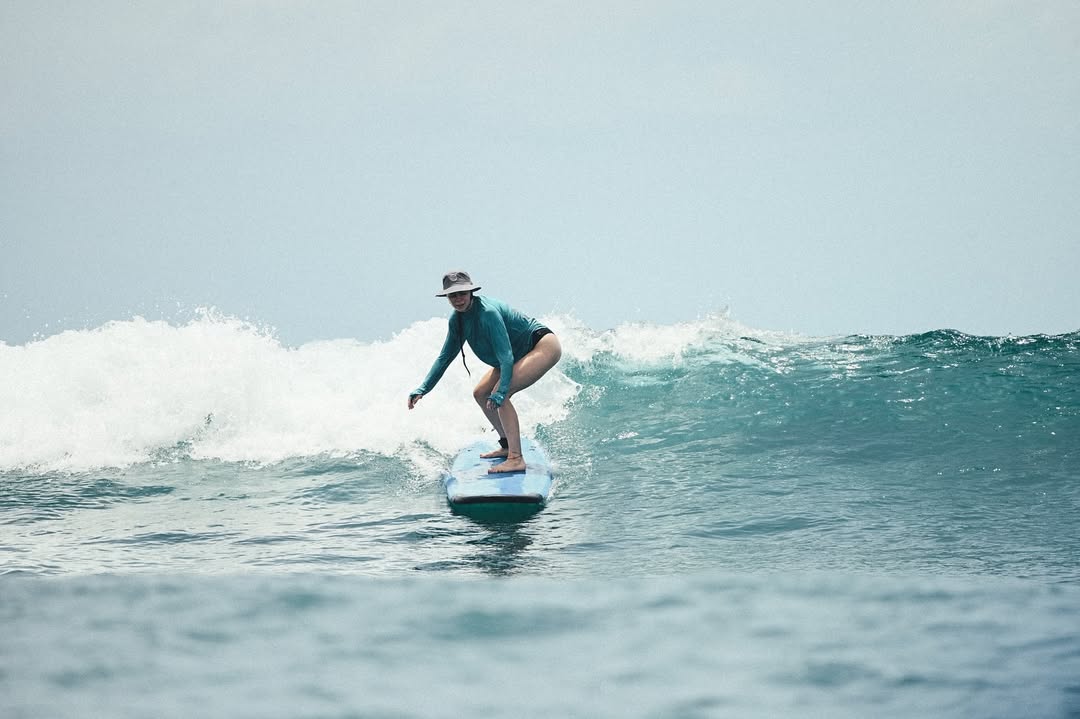
Even in a beginner-friendly destination, the wrong lesson structure can slow your progress. Nuna highlights a few elements that are particularly relevant for beginners. Small groups (1 coach : 2 students): A low ratio tends to mean more feedback, more waves per person, and a calmer learning environment. For many first-timers, this matters more than the perfect surf spot. ISA-certified local coaches: Nuna states its coaches are ISA-certified and emphasizes local knowledge. For international travelers, that is a strong trust signal—especially for beginners who are still learning safety and etiquette. Video and photo analysis: Beginners often believe they are doing one thing, but the video shows something else (stance too wide, pop-up too late, looking down, weight too far forward). Calm feedback helps you make one small change at a time. Nuna describes daily video/photo review as part of the progression approach.
What a beginner surf camp week can realistically look like: Early sessions: comfort in the ocean, basic positioning, consistent pop-up in suitable waves. Mid-week: more consistent wave catching, longer rides, better control in whitewater. Later sessions: learning to angle along the wave face, early turning fundamentals, improved wave selection and confidence. It is also normal to have flat days where you feel you did not improve. In a good program, those days are used to refine technique and build consistency.
Practical planning tips: Tell the camp your real starting point—if you have never surfed, are not comfortable in deeper water, or have injuries or mobility limitations, be clear so coaches can match you to the right conditions. Choose accommodation that supports rest: dorms can be great if you sleep well in shared spaces; private rooms support better recovery if you are a light sleeper. Pack simply: swimwear, reef-safe sunscreen, comfortable clothes and sandals, light jacket for evenings, optional yoga mat for mobility work.
Choosing Between Surf Camp and Surf School
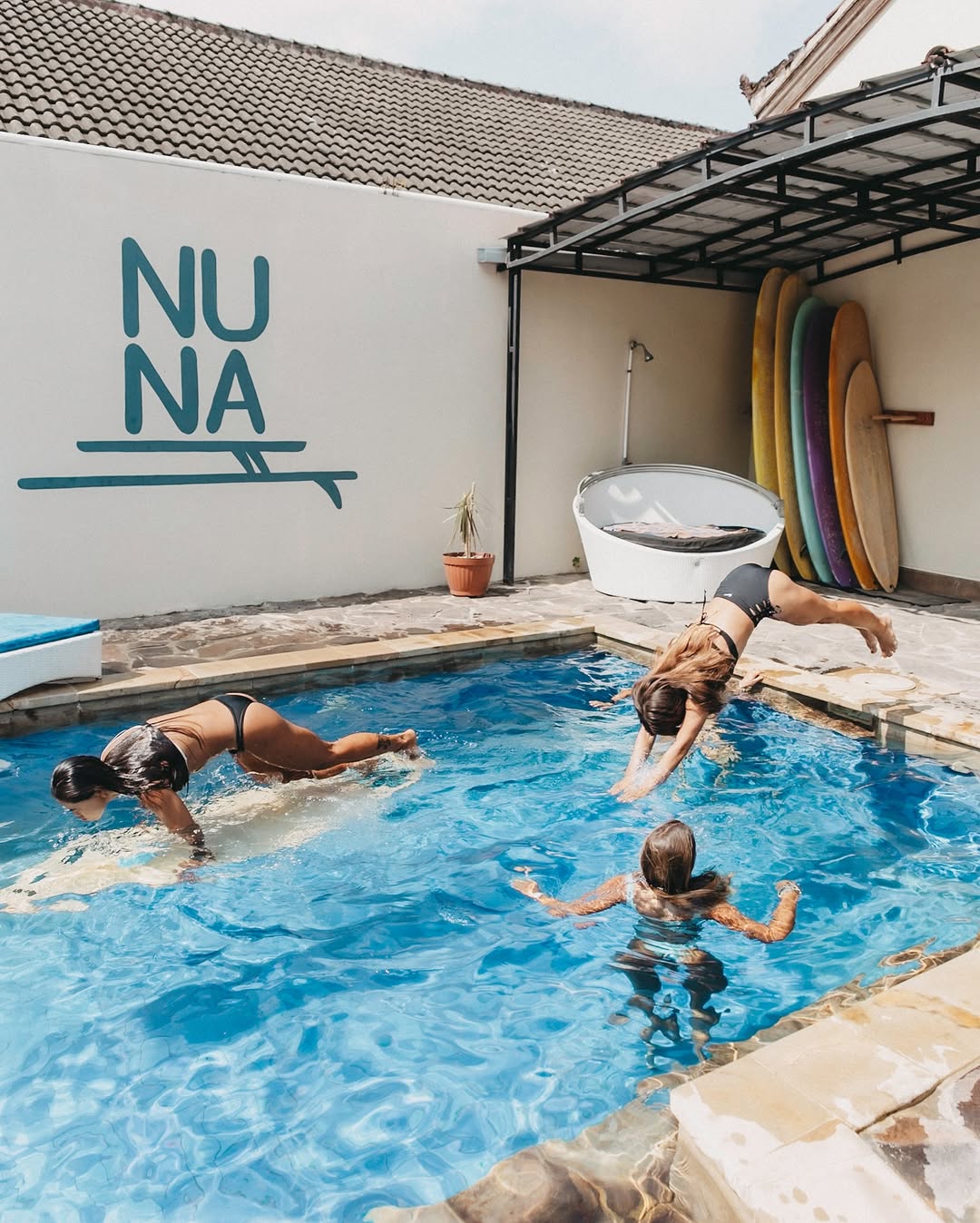
Lombok can be beginner-friendly in both formats; the question is what kind of trip you want. If you want a full routine with accommodation, a structured week, recovery sessions, and a supportive environment: start with Surf Camp. If you want coaching but prefer independent travel: consider Surf School (semi-private or private). Both formats can work well for first-timers—the main difference is how much structure and planning you prefer. For a deeper comparison of structure, accommodation, and cost, see Surf Camp vs Surf School in Lombok.
Surf Camp: Surf Camp | Rooms: Rooms | WhatsApp: Chat with Nuna Surf Camp (+62 822-3658-9725)